Your Attractive Heading
NEURO-INSERTION SOLUTIONS
for Human Digital Twins
Technology for Intervening in Non-Compressible Haemorrhage
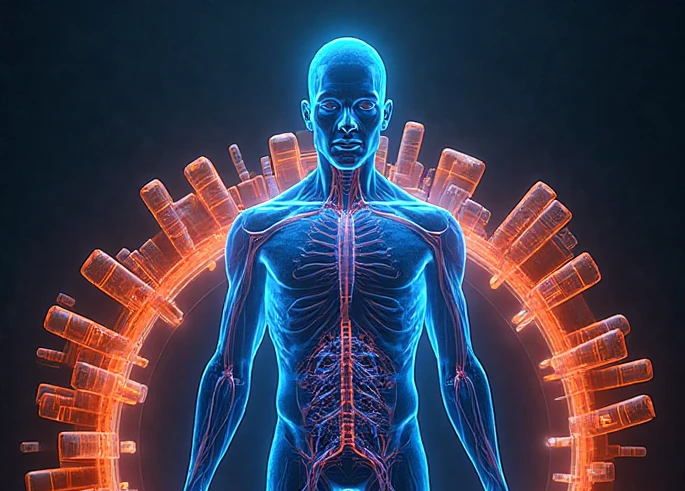
We are pioneering AI-driven digital twins to revolutionise emergency trauma care, particularly in combat and high-stakes settings where non-compressible haemorrhage poses a lethal threat. Our Emergency Assistant System will provide personalised digital twins of the vascular system, leveraging pre-scan data like ultrasound or CT to simulate hemodynamics in real-time.
read more…
Preventing, Detecting, and Supporting Musculoskeletal Conditions
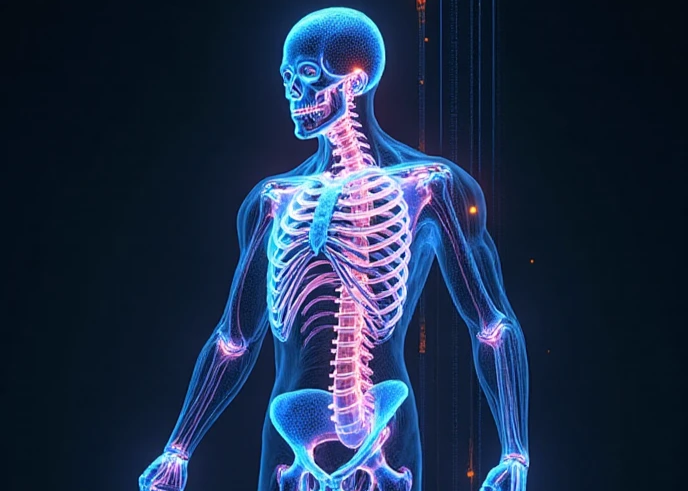
We harness neuro-symbolic digital twins to transform musculoskeletal (MSK) care, preventing injuries, detecting risks early, and supporting rehabilitation. By modelling biomechanics with data from wearables, IoT sensors, and anonymised health records, our technology provides verifiable, personalised simulations of joint, muscle, and bone interactions.
read more…
Creation of Treatment Scenarios of Wound Healing
Unlocking the complexities of wound healing, we employ neuro-symbolic digital twins to simulate biological processes and generate optimised, personalised intervention protocols. Our technology models multi-level interactions—from tissue regeneration to cellular and molecular dynamics—drawing on algebraic systems proven in virus-cell simulations and protein interactions.
read more…
Predictive Cardiovascular Monitoring
We propose advanced predictive cardiovascular monitoring, simulating dynamics from real-time wearable data to detect critical conditions early and assess personalised risks. Our neuro-algebraic framework combines AI’s efficiency with algebraic precision, creating reliable models of heart and vascular systems.
read more…
News
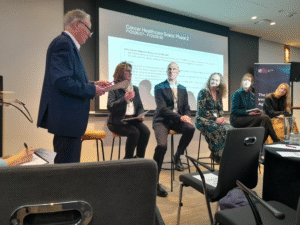
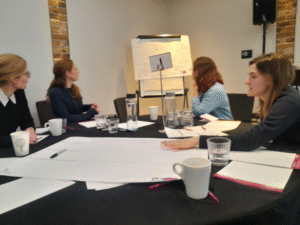
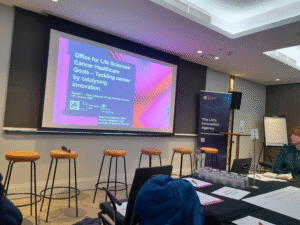
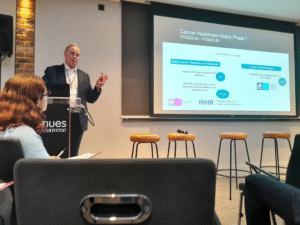
Our Leader Researcher, Prof. O. Letychevsky, attended the event “Early detection of less common cancers” organised by the Office for Life Sciences and Innovate UK in London on 15 January 2026.
It was the first of three cross-disciplinary collaborative sandpits focused on driving the early detection and diagnosis of cancer.
As was mentioned by organisers, these sandpits aim to bring participants together to form cross-sector consortia ahead of the anticipated launch of an early cancer diagnosis funding call, potentially covering the evaluation of early cancer diagnosis innovations, including for the detection of less common cancers, such as brain, gynaecological, sarcoma, haematological, hepato-pancreato-biliary cancers, and so on.
One of the main issues discussed at the event is the problem of data in the modern UK healthcare system.
As one of the key solutions for processing and analysing large sets of medical data, personalising medicine, and improving the qualitative and quantitative indicators of early cancer diagnosis, Oleksandr proposed a project that considers the creation of a library of Human Digital Twins. The proposal aroused interest among the participants, lively discussions, and debates.
We thank the Office for Life Sciences and Innovate UK for the provided opportunities. See you at the next events.
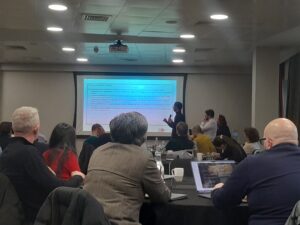
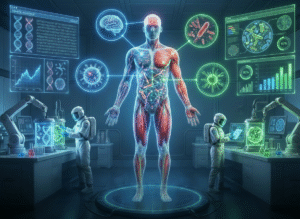
On February 3-4, in Birmingham, our lead researcher, Prof. O. Letychevsky, participated in the sandpit workshop “Microbiome Engineering for Resilience and Performance” that was organised by Defence Science and Technology Laboratory (DSTL).
The sandpit was focused on how engineering of the human microbiome could help to enhance the resilience and performance of defence personnel.
In the process of working together with leading UK specialists, the Digital Microbiome project was proposed and presented to interested investors.
How we do it
Where are we now
Overall Roadmap to Operational Solution:
• TRL 3: Experimental concept proof (6 months – 1 year).
• TRL 5-6: Digital twin prototype development (for chosen case of use) (1-2 years).
• TRL 7: Integration with wearable biosensors and telemedicine systems for real-time monitoring (1-2 years).
• TRL 8: Pilot implementation in civilian hospitals and field medical centres (2-3 years).
• TRL 9: Certification and commercialisation as a universal platform for personalised medicine and military applications (2-3 years).
Who we are

Leadership Team